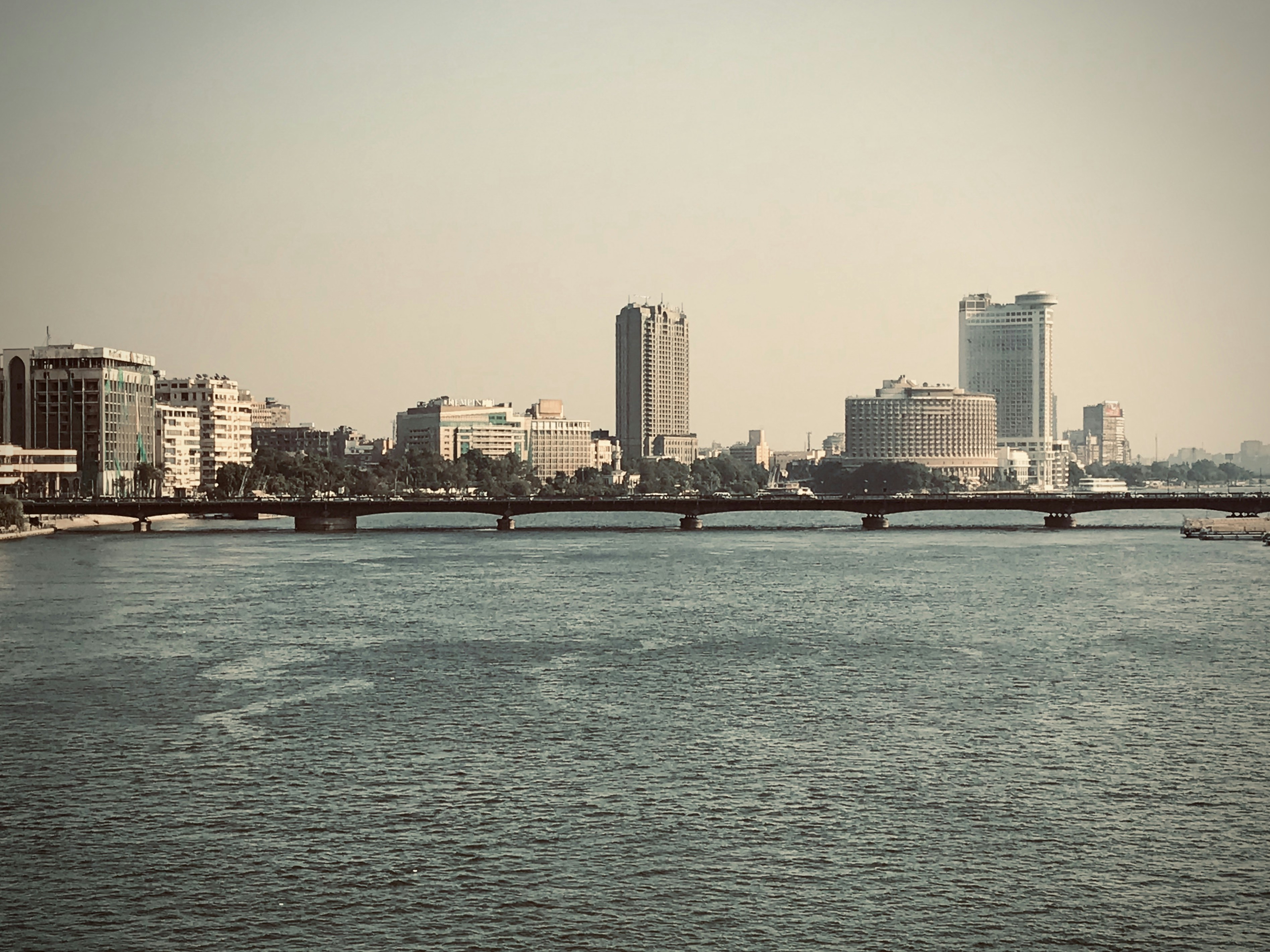
The weekend, answered
Spend a culturally curious Cairo weekend on the Nile, then connect the National Museum of Egyptian Civilization and Coptic Museum on Saturday before lunch back on Gezirah and Al-Azhar Park. On Sunday, explore Al-Muizz Street and Khan al-Khalili before contemporary art in Zamalek. Arrange car transfers with generous buffers, reserve dinner and leave Giza for a separate day if you want a substantial pyramid visit.
The Nile makes an appealing beginning: a long view, a table and the feeling that the city can wait while you arrive. By Saturday, change the scale. Look closely at an object, read the context of a church’s carved fragment, then step into a street where the day continues independently of your itinerary. Cairo rewards that alternation between distance and detail. A comfortable base is useful because the route has real travel demands, not because comfort substitutes for meeting the city.
Why this path matters
Egypt belongs to Africa, and Cairo’s history deserves attention in its own terms. Egyptian, Coptic, Arab and other identities cannot be flattened into a generic label for Black travelers. This weekend offers access to distinct histories and contemporary institutions, without assuming that the audience’s experience and the host city’s identities are interchangeable.
Friday evening: an island base and a Nile-facing table
5 p.m. — Check in at the southern tip of Gezirah
Sofitel Cairo Nile El Gezirah, at 3 El Thawra Council Street, occupies the southern tip of Gezirah Island. It provides a comfortable base with river views and dining, but the northern Zamalek gallery district is a separate journey. Choose a room category against your budget, rather than assuming every booking includes the same view or facilities.
7:30 p.m. — Start with Egyptian cooking, not a cross-city dash
Reserve Kebabgy Oriental Grill at the hotel and request an outdoor river-facing table if that matters to you; a request is not a guarantee. The hotel describes grilled meats and Oriental dining here. Ask about current dishes and preparations, and build a meal around what you want to eat rather than ordering a supposed national tasting menu that the kitchen does not offer.
Saturday: two museums, Nile lunch and a green pause
9 a.m. — Egypt’s longer timeline in Fustat
Leave the hotel around 8 a.m., allowing roughly 45–60 minutes plus arrival slack for the drive to the National Museum of Egyptian Civilization in Fustat, at Ein Elsira. The museum publishes daily hours of 9 a.m.–5 p.m., with the last ticket sold at 4 p.m. Use its official ticket link and check the current ticket categories and photography restrictions.
Allow two hours. Choose a manageable set of galleries rather than trying to absorb every century. The main, textile and Royal Mummies galleries each invite a different kind of looking; confirm what your ticket covers. In the mummy galleries, follow the posted conduct rules and let the encounter remain contemplative. The point is historical understanding, not collecting an image of every room.
Noon — Coptic material culture in Old Cairo
Allow 30–45 minutes to reach the Coptic Museum, at 3 Mar Girgis Street in Old Cairo, and keep 75–90 minutes for the visit. Its official visit page lists daily hours of 9 a.m.–4:30 p.m. and last ticketing at 4 p.m. Confirm any extra photography charge before using a camera.
2:30 p.m. — Lunch and a reset on Gezirah
Allow 45–60 minutes to return to the hotel for a reserved lunch at Le Sud, at the same 3 El Thawra Council Street address. The restaurant’s official page describes lunch and dinner with Mediterranean cooking. Confirm your lunch reservation directly: the page’s numerical hours display is inconsistent and should not be treated as a reliable service clock.
Choose from the current menu, perhaps pasta, tapas or another Mediterranean preparation if offered, and explain dietary needs before ordering. These culinary references differ from Friday’s Egyptian barbecue; enjoy that distinction rather than presenting every meal in Cairo as Egyptian cuisine. Returning to your base also gives you a chance to freshen up after two museums before the park. Keep the table unrushed, then leave enough time for the next drive.
Traveling independently and interested in shared company? Check Liberated Paths Connect for current gatherings and experiences. Join only if the actual location and timing fit; this itinerary does not assume there is an available Cairo event.
4:30 p.m. — The city from Al-Azhar Park
Allow another 30–45 minutes to reach Al-Azhar Park, entered from Salah Salem Street. Its published hours are 9 a.m.–10 p.m.; check current admission and access before traveling. Spend an hour or more walking slowly, choosing a shaded or sheltered place to pause, and looking back toward the city.
This is the restorative interlude. You have already spent much of the day processing history, so the park need not become another research assignment. Carry water and plan around the heat. In heavy rain or uncomfortable conditions, return to the hotel and use the time for rest; the weekend has enough cultural substance without an enforced outdoor finale. Leave 45–75 minutes for the evening drive back.
The person behind a collection
The Cairo Governorate’s account of the Coptic Museum credits Marcus Simaika Pasha with establishing it in 1910. His collecting included architectural elements saved during church renovations. That origin changes how you look at a fragment: it is an object with an original setting and a later history of preservation. Ask what the label tells you about both, instead of treating every piece as a detached example of a single timeless style.
Sunday: historic streets, then the contemporary city
9 a.m. — Al-Muizz Street and Khan al-Khalili
Arrange a driver or a booked guide to begin near Bab al-Futuh, then follow a manageable section of Al-Muizz Street before entering the adjoining Khan al-Khalili area. Egypt’s official tourism account of Historic Cairo connects these streets and monuments. Allow two hours, including pauses, rather than attempting every building between the historic gates.
A street walk and admission to a monument are different experiences. Confirm any interior ticket, opening and dress requirements separately. Shops do not necessarily follow one uniform opening time, so an early visit is best understood as architecture and orientation first, shopping second. Ask permission for portraits and approach a purchase as a considered transaction, with the price and material agreed before payment.
Noon — Contemporary art in Zamalek
Allow 45–60 minutes to reach Ubuntu Art Gallery, at 20 Hassan Sabry Street, with the entrance on Ibn Zinky Street. Its published schedule is 11 a.m.–8 p.m., every day except Friday, making Sunday the useful choice. Check the exhibition calendar and confirm access if your visit falls during a changeover.
Give the gallery 45–60 minutes. Ask what is on view rather than arriving with the expectation that the program will illustrate yesterday’s museums. Living artists are entitled to different subjects and arguments. Afterward, leave time for an unhurried lunch and the return to the hotel; if your flight is early, omit this northern island leg rather than sacrificing the airport buffer.
Planning notes, route and spending
The eight-stop path is Gezirah hotel → Kebabgy → NMEC in Fustat → Coptic Museum → Le Sud on Gezirah → Al-Azhar Park → Al-Muizz/Khan al-Khalili → Ubuntu in Zamalek. The travel allowances are planning buffers, not live traffic predictions. Prearranged car transfers are useful, especially with luggage, mobility needs or limited time. Request access details directly: historic streets and buildings can involve uneven surfaces and steps.
For unavailable museum access, spend longer at the other confirmed museum and retain lunch. If Ubuntu is changing exhibitions, take a slower historic-street morning and return to the hotel. In rain, the museums carry Saturday; move the park pause indoors. If pyramids are your priority, replace a full day with a separately planned Giza visit rather than bolting it onto this route.
Sample spending estimate: an illustrative US$950 per person for two adults sharing two nights allocates US$400 to lodging, US$220 to meals and drinks, US$170 to transfers and an optional guide, US$60 to admission and US$100 to contingency. These are planning allowances, not current Egyptian-pound prices, ticket quotations or a confirmed package. Flights, shopping and optional hotel treatments are excluded. Obtain actual totals before committing.
LP’s food-first city-break story helps pace meals around cultural visits; use current Egyptian venue menus and booking conditions for the actual trip. Browse the destinations directory for further discovery, or explore Connect for people and plans that suit your interests. Community gatherings may need host approval, and experiences can have separate charges.
Frequently asked questions
Does this weekend include the pyramids?
No. It is a Cairo city route. Give Giza a separately planned day or replace Saturday if the pyramids are your main priority.
Which museum should I book first?
Start with NMEC’s official ticket channel, then check the Coptic Museum’s current admission and photography rules. Their collections and visit conditions differ.
Can I visit Ubuntu Art Gallery on Friday?
Its published schedule excludes Friday. This route puts the gallery on Sunday and recommends checking exhibition changeovers.
Is the hotel in the same area as the Zamalek galleries?
It is on the southern tip of Gezirah Island. Ubuntu is farther north in Zamalek, so allow a separate transfer rather than assuming they are adjacent.
Are these venues described as Black-owned?
No. This guide centers Egyptian institutions and hospitality without making an unsupported ownership claim or collapsing distinct Egyptian identities.
Sources and review date
Research draws on the linked hotel, restaurant, gallery, museum, park, Cairo Governorate and Egyptian tourism sources. No first-party interview or site visit is claimed. Last verified: October 7, 2026. Confirm mutable details in the week of travel.