The weekend, answered
Build this New York weekend around Harlem and northern Central Park. Stay on the Upper West Side, eat at Red Rooster Friday, and visit the Schomburg Center and Melba’s Saturday before a confirmed Apollo performance or an exterior stop. Sunday links Conservatory Garden, El Museo del Barrio and the Seneca Village landscape. Reserve meals, distinguish public exhibitions from archival research, and check each performance’s actual venue.
Manhattan’s scale becomes more manageable when you give a weekend a boundary. Here, that boundary keeps you north of the major Midtown attractions and close to institutions that ask who gets remembered, collected and heard. There is pleasure in the route too: a dinner that can last, a meal rooted in a restaurateur’s home neighborhood, a garden where the morning does not demand much of you. This is a New York weekend with enough room to notice what is between the reservations.
Why this path matters
Harlem’s intellectual and performing traditions sit close to East Harlem’s Puerto Rican and wider Latin American cultural institutions, but proximity does not make their histories identical. Sunday’s movement across Central Park adds another layer: the landscape of Seneca Village, once home to a predominantly Black community. Together, these places encourage a more specific understanding of the city than a single label for “Black New York.”
LP’s Harlem 125th Street art-and-food day offers a related shorter route. This weekend shifts the emphasis toward archives, East Harlem and the park, giving a returning visitor another reason to spend time uptown.
Friday evening: a comfortable landing and a Harlem dinner
5 p.m. — The Upper West Side as your base
The Lucerne, at 201 West 79th Street, puts your two-night stay near the western side of Central Park. Book the room you need and ask about early arrival, luggage storage and any breakfast arrangement. The hotel is a hospitality choice, with no ownership identity implied by this guide.
7:30 p.m. — Red Rooster on Lenox Avenue
Reserve Red Rooster Harlem, at 310 Lenox Avenue. The restaurant’s published Friday service runs noon–10:30 p.m. Check its own booking channel for your date and clarify any dietary needs before arrival. Ask for the current wine list if you would like a glass with dinner.
Saturday: the collection, the cook and the stage
11 a.m. — Schomburg Center for Research in Black Culture
Allow 35–50 minutes from the hotel to the Schomburg Center, at 515 Malcolm X Boulevard and West 135th Street. Its published general Saturday hours are 10 a.m.–6 p.m.; individual research divisions have different schedules and access procedures. Beginning at 11 gives you a useful arrival window, but confirm the public exhibition you intend to see.
Spend 75–90 minutes with the accessible exhibition spaces. For a weekend visitor, looking carefully at a small set of objects can be more revealing than treating the institution as a box to tick. If you want archival materials, consult the research instructions ahead of time. Public admission does not automatically provide handling access to rare books, manuscripts or photographs.
The library’s centennial timeline records its acquisition of Arturo Schomburg’s collection in 1926. Knowing that a collection began with sustained, deliberate gathering changes the visit: the evidence did not simply appear in a public building. Someone recognized that it needed to be preserved.
1:30 p.m. — Lunch at Melba’s
Leave 30–40 minutes for the southward journey and final walk to Melba’s Harlem, at 300 West 114th Street. The restaurant publishes weekend service from 10 a.m.–11 p.m. Reserve this location specifically; a familiar restaurant name is not enough when a business operates more than one address.
Interested in sharing a table or another cultural stop? Browse Liberated Paths Connect for current plans and experiences. Look for a gathering whose timing fits your booked day; a New York trip does not guarantee an available match.
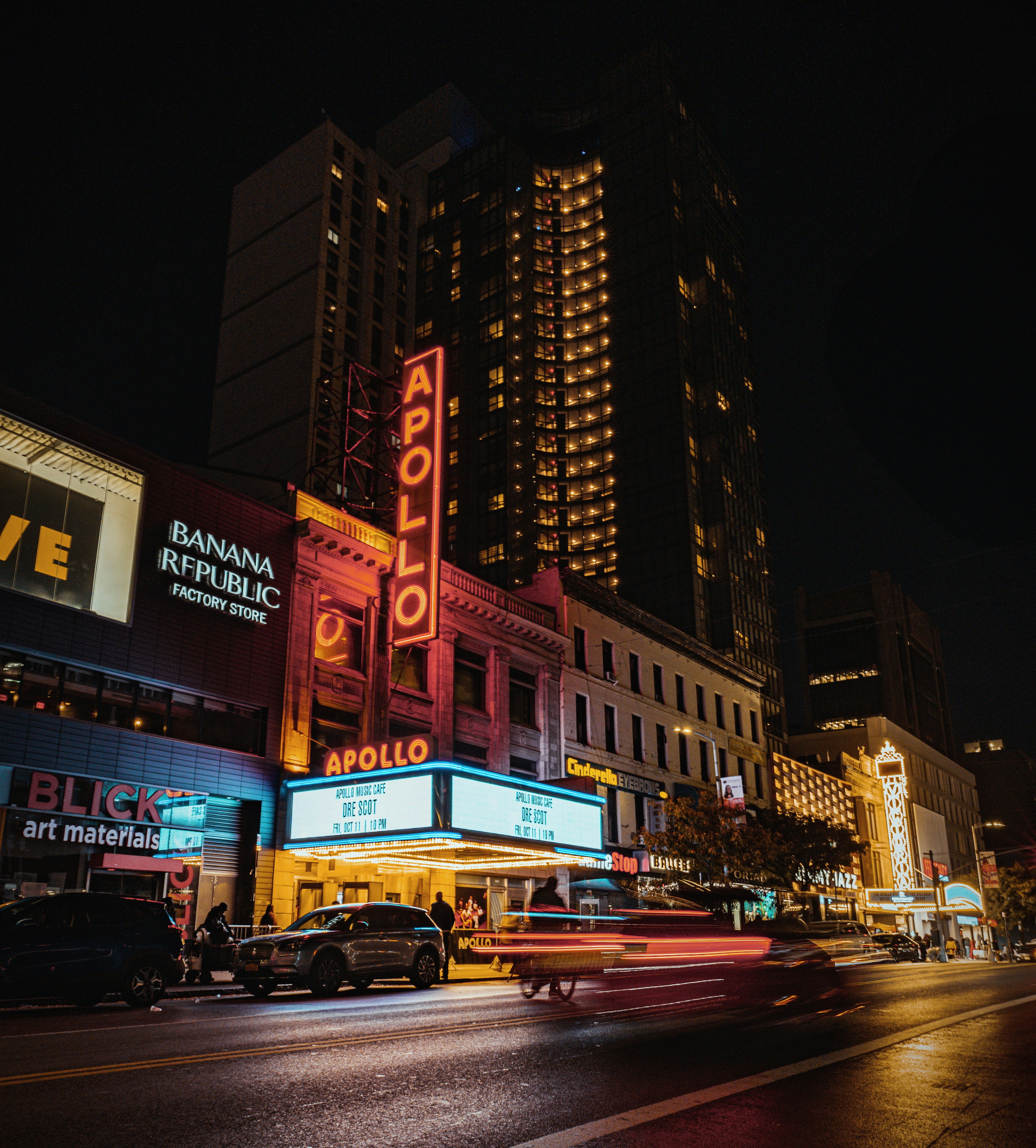
Late afternoon or evening — Apollo, with the correct ticket
The Apollo’s visit page says its historic theater at 253 West 125th Street is closed for renovation, with reopening expected in late 2026. The Apollo Stages at the Victoria, at 233 West 125th Street, is a separate venue. Book only a confirmed performance at its stated location; an expected reopening date is not operating confirmation.
With a confirmed evening ticket, return to the hotel after lunch and allow 45–60 minutes for the trip back and entry. Without one, make a daylight exterior stop on 125th Street and leave the evening flexible. An exterior visit does not include backstage access, a tour or a seat. Historic-theater tours also require a fresh access check; do not plan an interior visit during the closure.
The person behind lunch
Melba’s official biography identifies Melba Wilson as a Harlem native who opened the restaurant in 2005, after working at places including Sylvia’s and Windows on the World. That experience puts the meal within a working hospitality career rather than a generic list of famous names. Her biography adds context without promising a personal greeting.
Sunday: garden, museum and the landscape beneath the park
9:30 a.m. — Conservatory Garden
Allow 35–45 minutes to reach Conservatory Garden, entered from Fifth Avenue at East 105th Street. The Conservancy lists daily opening from 8 a.m., with seasonal closing times; October closing is 6 p.m. Check restoration and access notices before traveling.
Keep an hour for a slow walk through the formal gardens. This is the restorative pause, and it is deliberately before the museum rather than squeezed into the end of the day. Enjoy the design and plantings without expecting a particular flower to peak for your visit. In heavy rain, arrive later for the museum instead and give yourself an easier morning.
11 a.m. — El Museo del Barrio
Walk about 5–10 minutes to El Museo del Barrio, at 1230 Fifth Avenue near East 104th Street. Its published opening is Thursday–Sunday, 11 a.m.–5 p.m. Check current exhibitions, tickets and any free-admission conditions through the official visit page.
The museum’s mission centers Puerto Rican and broader Latin American art and culture in the United States. Its collection account recognizes Amerindian, African and European foundations within visual cultures of the Americas. That provides a useful diaspora conversation without implying that every artist or every Puerto Rican identity is Black. Give the current exhibition 75–90 minutes and read the artists’ own contexts.
1 p.m. — Seneca Village, if departure allows
After a lunch break, reserve 45–60 minutes to travel across and south through the park toward the Seneca Village landscape, on the west side between 82nd and 89th Streets. Use the Conservancy’s map rather than following a straight line across paths. Allow another 30–45 minutes for interpretation, then 15–25 minutes to return toward the hotel.
The Conservancy explains that the community existed from 1825 to 1857 and included Black property owners alongside Irish and German residents. The city acquired the land for Central Park, requiring residents to leave. Today, interpretive signs help make the former neighborhood legible within a landscape of trees, rocks and paths. It is not a surviving village of visitable homes. The quieter work is to look at a familiar public park while remembering the people displaced in its creation.
Planning notes, route and spending
The eight-stop path is Lucerne → Red Rooster → Schomburg Center → Melba’s → Apollo → Conservatory Garden → El Museo → Seneca Village. Saturday stays largely within Harlem; Sunday begins on the park’s northeast edge and finishes west. Keep the final park leg optional for an early departure. Airport transfers need a separate buffer based on your airport, luggage and airline requirements.
If Schomburg exhibitions are unavailable, retain lunch and give Sunday’s museum more time. Rain replaces the garden and Seneca walk with a longer El Museo visit. For a relaxed indoor alternative, LP’s verified Harlem Hops listing links to a beer-focused business; check the venue’s current service before adding it. It is an optional swap, not another required stop.
Sample spending estimate: an illustrative US$1,200 per person for two adults sharing two nights allocates US$500 to lodging, US$300 to meals and drinks, US$120 to transport, US$80 to museum and optional performance admissions, and US$200 to contingency. These are budget allowances, not actual room or ticket prices. Flights and shopping are excluded, and a premium performance can exceed the admission allocation. Check taxes and tipping separately.
Explore LP’s destinations directory for further discovery, or return to Connect to look for company that suits your interests. Community gatherings may require host approval, and experiences can have separate charges. Leave enough flexibility for a meaningful conversation when one arises.
Frequently asked questions
Can I use Schomburg archival collections as a walk-in visitor?
Not automatically. Public exhibitions and research access are different. Review the relevant division’s registration and material-request requirements ahead of time.
Does the Apollo stop guarantee a performance?
No. The historic theater is closed for renovation at verification. Book a specific event at its confirmed venue or use the exterior stop.
Is El Museo del Barrio open Sunday?
Its published schedule is Thursday–Sunday, 11 a.m.–5 p.m. Check the current exhibition and ticket conditions for your date.
What remains of Seneca Village?
The former settlement is interpreted within Central Park’s landscape through signs and research. This is not a group of preserved houses to enter.
Is this route practical for an early Sunday flight?
Shorten it. Keep the garden or museum only if timing permits, omit the Seneca Village leg and protect your airport transfer and check-in buffer.
Sources and review date
Sources include the Lucerne, Red Rooster, NYPL, Melba’s, Apollo, El Museo del Barrio, Central Park Conservancy and Harlem Hops. This is researched curation; no interview or field visit is claimed. Last verified: October 7, 2026. Recheck exhibitions, performances, access and transit conditions before traveling.