
Before entering the International African American Museum, look beneath it.
The building rises on pillars above the eastern edge of the Charleston peninsula, leaving the ground visible rather than consuming it. This is Gadsden's Wharf, a place the museum identifies as the disembarkation point for tens of thousands of enslaved Africans between the late 1760s and the federal end of the trans-Atlantic slave trade in 1808. An archaeological investigation found remnants of the old wharf, along with timbers and the brick floor of a storehouse used to confine African captives before sale.
Architecture cannot repair that history. It can decide whether to conceal it. Here, the museum's elevation makes the land part of the encounter, while the African Ancestors Memorial Garden turns the space below and around the building into a place of water, landscape, memory and pause.
That is why the International African American Museum should not be treated as a quick Charleston attraction wedged between breakfast and a carriage tour. The museum tells stories across the African diaspora and the United States, but its location refuses abstraction. A first visit works best when the practical decisions—ticket time, parking, meals and emotional pace—protect the meaning of the place rather than interrupt it.
Reserve a timed ticket, then protect three hours
IAAM currently sells timed-entry tickets and recommends buying online. Its own guidance suggests 90 minutes to two hours for the interior, plus another 30 to 60 minutes for the garden. Treat that as a minimum, not a dare. A three-hour window gives a first-time visitor enough room to stop reading when attention thins, sit down and begin again.
As of August 13, 2026, non-South Carolina adult admission is $22.50; state residents pay $15.50 with identification. Youth, senior and military prices are lower, and children under 6 enter free. Through Museums for All, eligible SNAP/EBT visitors can purchase $2.50 tickets for as many as four people at the visitor-services desk. Prices and programs change, so follow the museum's live ticket page rather than a screenshot or third-party listing.
Hours deserve the same care. The detailed visit page says the museum opens Tuesday through Saturday from 10 a.m. to 5 p.m. and Sunday from noon to 5 p.m., with last entry at 4 p.m.; the Sunday noon opening took effect in July 2026. It is closed Monday, Thanksgiving and Christmas. Some generic headers on the museum's site still summarize Sunday as a 10 a.m. opening, so verify the dated planning page when building the day.
The address is 14 Wharfside Street. The museum directs drivers to the city garage at 24 Calhoun Street, with metered spaces on Washington and Concord streets. Do not let parking uncertainty make you late: the museum says late admission is not guaranteed, although the desk may exchange a ticket for a later time if capacity allows.
Begin outdoors, where the building refuses to cover the past
Arrive early enough to enter the garden before your ticket time. Admission to the African Ancestors Memorial Garden is free, and the museum says it is open to the public independently of an interior ticket. The sequence matters. Water and landscape establish the former shoreline; the building's open underside keeps attention on what happened here; the harbor places Charleston inside an Atlantic story rather than a self-contained local one.
Avoid turning the ground into a photo backdrop before understanding it. Read. Stand still. If traveling with children, offer clear language before arrival so they are not meeting the history for the first time in public. If traveling with elders or relatives who approach the site through family knowledge, do not rush the conversation in order to meet a restaurant reservation.
The garden is not an appetizer for the museum. It is one of the museum's central arguments: history occupies space, and that space persists beneath whatever a city later builds.
Let one gallery lead to another
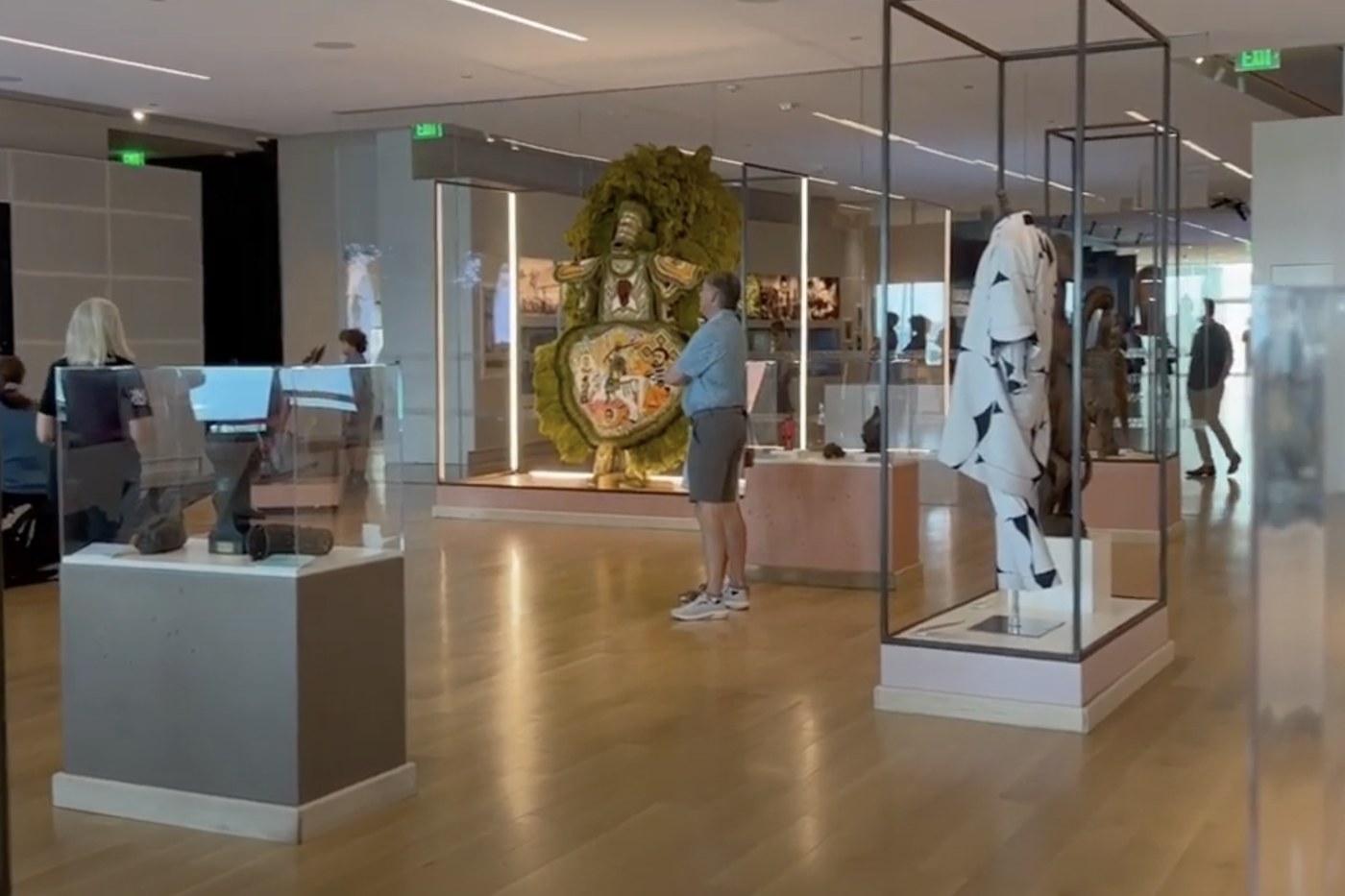
IAAM opened to the public in June 2023 with nine galleries. Its scope moves beyond a linear march from enslavement to civil rights. The museum connects African origins, the Atlantic world, South Carolina, Gullah Geechee culture, resistance, migration, creativity and contemporary life. Temporary exhibitions add another lens; at the time of this fact-check, middle of somewhere: the art and the legacy of Black Southern makers was on display.
Trying to absorb every name, date, object and screen produces a peculiar kind of forgetting. Instead, make an initial circuit and notice which thread asks you to return. It may be a South Carolina story that complicates the city's polished historic district, an account of migration that echoes your own family, or an artwork that refuses the usual split between historical evidence and living culture.
Use the museum's Bloomberg Connects audio guide if audio interpretation improves access or focus. Elevators and quiet rooms are available, and IAAM invites visitors with accessibility questions to contact the museum ahead of time. A quiet room is also a practical resource in a museum whose subjects may be intellectually dense and emotionally demanding; using it is not abandoning the visit.
Bring a real question to the Center for Family History
General admission includes the Center for Family History. This does not mean an ancestor will be found during an afternoon. Genealogy rarely rewards that expectation. Records are incomplete, names change, family accounts conflict and the archive of enslavement often documents property more readily than personhood.
The center is most useful when curiosity arrives in a workable form. Before the trip, write down the full names, approximate birth years and locations of parents, grandparents and great-grandparents you already know. Note nicknames, churches, military service, migration routes and counties—not only states. Ask what kind of record should come next, or how to distinguish two people with similar names.
If you want individualized research help, investigate the museum's separately booked virtual genealogy consultation before visiting; the center currently says it does not provide on-site, one-to-one consultations. The more modest goal for a first visit is to leave with a better question and a responsible method for answering it.
Plan food after the museum, not inside the promise of an old listing
The Liberated Paths directory currently carries an “International African American Museum Cafe” record associated with Gullah Geechee culinary interpretation. The museum's live site now invites rotating Charleston vendors into the IAAM Café, which means operator, menu and service can vary. Confirm what is open on the day of the visit instead of building the itinerary around a particular chef or dish.
Even when food is available, keep the next meal flexible. Some visitors will want conversation immediately; others will need quiet. Choose a nearby table because it suits the group's state of mind, not because the day requires another heritage experience. Black history should not become a theme applied to every hour of a trip.
The museum's most useful effect may come later—on a walk along the water, in a family call, or while reconsidering the version of Charleston sold by another site. Leave that space open. A serious museum does not simply fill an afternoon. It changes the questions a traveler carries into the rest of the city.