
The Strip has trained diners to look upward: toward signs, marquees, chandeliers and the names of chefs rendered several stories high. Drive west, and Las Vegas lowers itself. The scale becomes a sequence of neighborhood plazas and broad roads, the evening organized less by spectacle than by where someone told you to eat.
In a shopping center at 1750 South Rainbow Boulevard, Suite 8, Calabash African Kitchen offers a different kind of arrival. There is no need to decode a casino floor. The restaurant's proposition is direct: a Black-owned table shaped by the neighboring cuisines of the Gambia and Senegal, with rice, peanut-rich stews, grilled fish and the hospitality of a meal meant to be shared.
For a first-time diner, the menu can feel both welcoming and expansive. The useful approach is not to order every unfamiliar word. It is to understand the structure, ask a few good questions and let three or four dishes introduce themselves in relation to one another.
Begin with the geography on the menu
Chef and founder Oulay Ceesay Fisher grew up in the Gambia and describes Calabash as an expression of the food traditions that connect Gambian and Senegalese communities. The restaurant uses “Senegambian” deliberately: not as a vague synonym for all West African cooking, but to name a region whose contemporary border contains deeply connected languages, families and foodways.
Calabash also uses “Jollof-inspired” to describe its cooking, a reference to the Jollof people and the region's shared culinary inheritance. That specificity matters. “African food” is too large a category to tell a diner what will reach the table, just as “European food” would be inadequate preparation for dinner in Naples or Dakar.
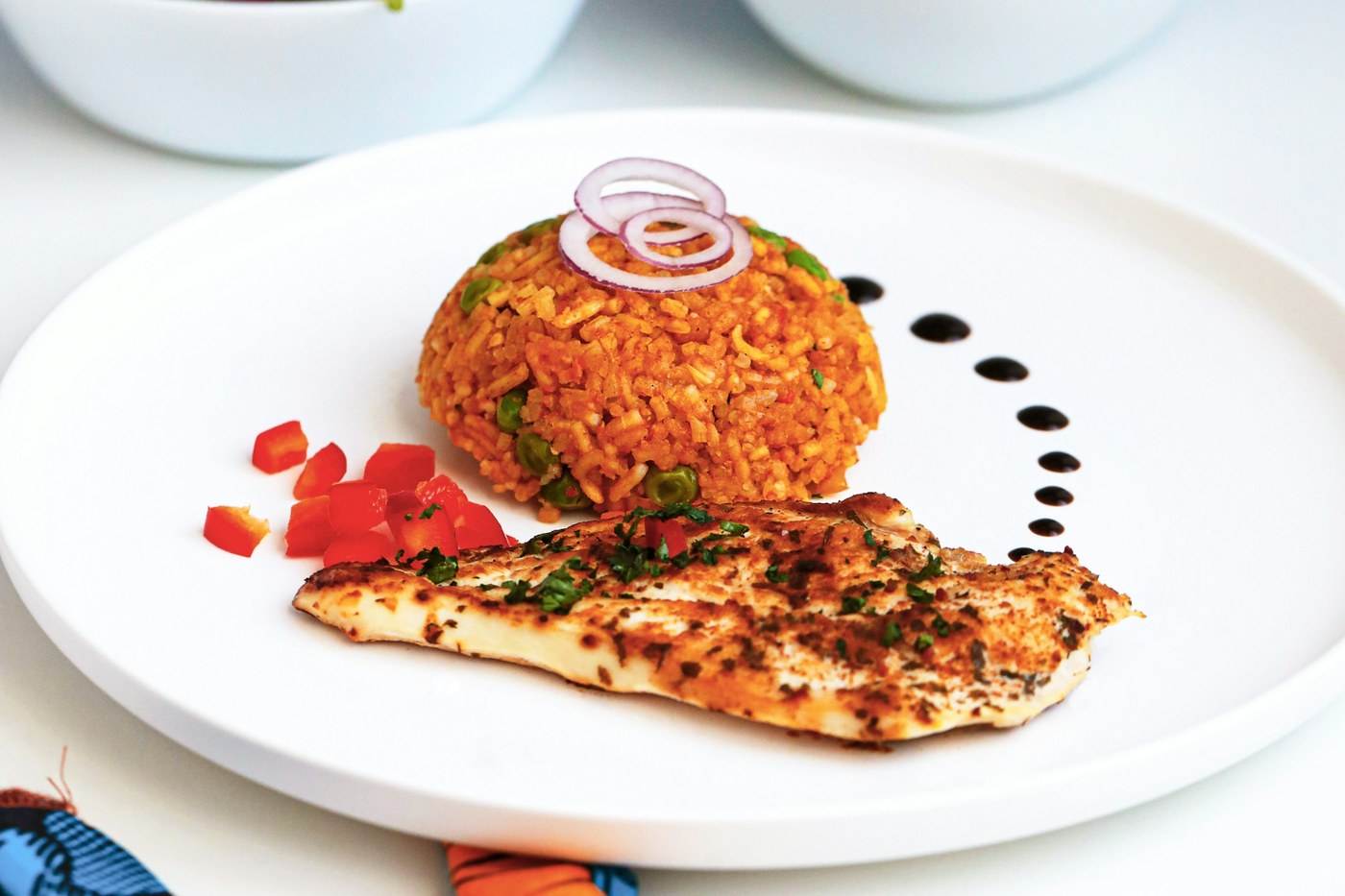
The menu moves among rice dishes, stews, fried starters and grilled proteins. Benechin or cheb brings rice and seasoning together as the center of the plate. Mafe-domoda is a peanut-based stew with a deep, rounded richness. Egusi is built from ground melon seeds and is often paired with fufu, a soft, starchy accompaniment. Fataya—small savory pastries—makes a useful opening for the table. Fish, oxtail and other proteins give the group ways to compare sauce, smoke, texture and heat.
These are descriptions, not commandments. Recipes and names travel across borders and households. Ask how Calabash prepares a dish instead of telling the server what it is “supposed” to be.
Order a conversation, not a private tasting menu
For two diners, begin with one starter, one rice-centered dish and one stew or grilled main. For four, add a second main and consider contrasting textures: crisp fataya, yielding fish, rice that carries sauce, fufu alongside a stew. This creates a meal with progression without burying the table under containers before anyone has learned what they like.
If jollof is the reason for the visit, order it—but resist turning dinner into the internet's familiar contest over which nation makes the superior version. The rivalry can be playful among people who belong to it; from a visitor, it can flatten regional variety into a punch line. Taste Calabash's rice on its own terms. Notice the seasoning, the grain, the way it meets fish or stew.
Fufu can be approached with the same humility. If you have not eaten it before, ask the staff how they recommend pairing it with the chosen dish. Eating with the hand may be customary in many settings, but a restaurant table is not a performance of authenticity. Follow the house's lead, use the hand or utensil that makes the meal comfortable and concentrate on the food rather than whether you look initiated.
Heat is another reason to ask rather than assume. “Spicy” can refer to chile intensity, but a cuisine may be richly spiced without being punishingly hot. Tell the server what level you enjoy. The useful diner is neither boastful nor fearful; they are specific.
Treat allergies as a planning question
A peanut-based stew announces one major allergen, but first-time diners should also ask about melon seeds, fish, shellfish, dairy, gluten and cross-contact as relevant. Calabash says it offers numerous vegetarian, vegan and gluten-free dishes. It also says most meats are halal except for oxtail and chicken drumsticks, while warning that non-halal meat may occasionally be substituted if halal supply is unavailable.
Those statements are a starting point, not medical assurance. Menus, suppliers and kitchen practices change. Call before visiting if an allergy is serious, then confirm again at the restaurant. Diners who keep halal should ask about the exact dish, protein and preparation rather than relying on a general label. A generous table should still be an informed one.
Recognition without turning dinner into a trophy
In 2026, the James Beard Foundation named Ceesay Fisher a semifinalist for Best Chef: Southwest. The distinction brought national attention to a restaurant that had already built its identity around family tradition and local hospitality. She was a semifinalist, not the eventual category winner—a small but important fact in an era when accolades are frequently inflated as they travel across social media.
The recognition can help travelers find Calabash. It should not become the only reason to go. Awards are snapshots from institutions; a restaurant's deeper achievement is repetition—the hundredth pot of rice, a staff member guiding a new diner, a family returning because the room has become part of its Las Vegas.
The restaurant also advertises live music and DJ programming on selected evenings. Treat those schedules as changeable. Check the current calendar or call before choosing a night around entertainment, especially if conversation, sensory load or seating location matters to anyone in the group.
Plan the off-Strip evening well
Calabash currently lists dine-in hours Tuesday through Sunday from 11:30 a.m. to 8:30 p.m., with pickup and delivery from 11 a.m. to 8 p.m.; it is closed Monday. Those hours are notably earlier than the casino corridor's late-night rhythm. Do not leave dinner until after a show and assume every Las Vegas kitchen serves past midnight.
The Rainbow Boulevard address is west of the Strip, so allow for traffic and use a current map on the day of the visit. A rideshare is simple if the group plans to drink. Drivers should confirm the precise suite before entering the plaza rather than circling while hungry. Reservations are available and are especially sensible for a larger party or an evening with live entertainment.
If one guest wants a quiet first experience, lunch can be an excellent introduction. The menu remains the reason for the drive, while the room may be easier to navigate without an event underway. If dinner is the plan, arrive early enough to order with attention.
Let one restaurant expand the map
Calabash African Kitchen does not need to stand in for every West African restaurant, every Gambian household or every Black-owned business in Las Vegas. Its value is more precise. It lets one chef tell a regional story in her own terms, and it gives visitors a practical reason to move beyond the most heavily marketed miles of the city.
The best first dinner ends without a claim to expertise. You may leave knowing which texture you want again, which stew deserves a second visit and which question you will ask sooner next time. That is enough. A city becomes more interesting not when a traveler collects cuisines, but when they learn to recognize the people and histories making a meal possible.
A Simple First-Visit Order
- For two: One fataya order, one rice dish and one stew or grilled main; ask whether portions suit sharing.
- For four: Add a second main with a contrasting texture and a vegetable side if available.
- For dietary needs: Call ahead, then reconfirm ingredients and cross-contact at the table.
- For entertainment: Check the current live-music or DJ schedule; do not rely on an old social post.
- For timing: Plan an early dinner. The restaurant currently closes dine-in service at 8:30 p.m. and closes Mondays.