
From above, Victoria Island reads as Lagos often does in photographs: water, causeways, towers and traffic held in a single restless frame. At street level, the city is more intimate and less easily summarized. A carved chair becomes a history lesson. A cinema lobby becomes a gathering place. A familiar stew arrives reframed, without surrendering the memory that made it familiar.
The most coherent way to spend a design-minded day here is not to chase every gallery and showroom in Lagos. It is to follow one question: what happens when African design is treated as structure rather than surface?
That question links two Liberated Paths directory entries in Victoria Island. White Orchid Hotel Lagos sits inside EbonyLife Place, the hospitality and entertainment resort founded by Nigerian media entrepreneur Mo Abudu. A short drive away, NOK by ALÁRA extends a concept store devoted to African fashion, art and objects into a restaurant and garden. Together, they offer a compact introduction to the city’s creative confidence—provided the traveler leaves enough room for Lagos itself.
Start where film, hospitality and African interiors meet
White Orchid is a small boutique hotel rather than a conventional international tower. Its location is the real proposition: the rooms are part of EbonyLife Place, a self-contained campus with restaurants, a rooftop, event spaces and a five-screen cinema. The current resort site describes an African art collection, handcrafted furniture, record players and vintage vinyl as part of the stay.
Those details are not incidental. EbonyLife was built around the circulation of African stories on screen; the hotel translates that authorship into physical space. A guest can return from a meeting, catch a Nigerian film in the building, eat without crossing the city and end the night with a record playing in the room. For a first arrival after a long flight, that concentration can be a form of luxury more useful than a marble lobby.
Book directly enough to ask practical questions. Room categories and inclusions change, and White Orchid's own pages do not always describe the inventory in exactly the same way as the larger EbonyLife Place site. Confirm the room type, breakfast, airport transfer, accessibility needs and any event noise before paying. If a balcony or a quiet room matters, request it rather than assuming the most photogenic image represents every category.
Treat the hotel as a base, not a bunker
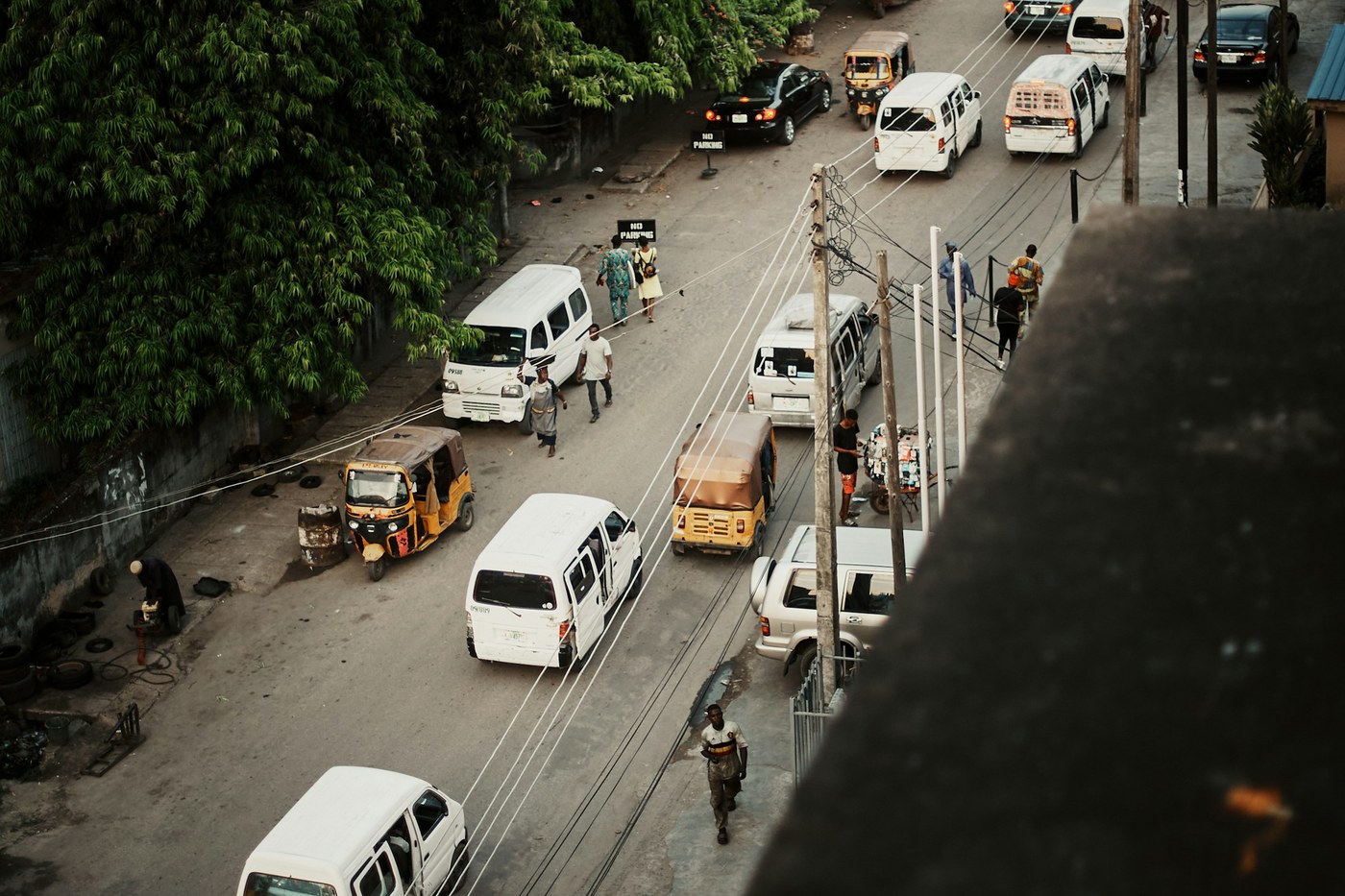
Lagos rewards confidence but punishes over-scheduling. Distances that look short on a map can expand, especially when rain, events or commuter traffic compress the roads. The useful move is to group the day in Victoria Island and arrange a known driver or ride-hailing pickup rather than stacking reservations across the mainland and islands.
Give the first morning to the property. Walk the public spaces slowly. Ask what Nigerian artists and makers are represented. Check the cinema schedule only after arrival because programming changes. If the rooftop is hosting a private function, accept the pivot. A resort with multiple venues offers alternatives; it does not guarantee that every photographed room belongs to every guest at every hour.
The restraint matters. There is a temptation, particularly on a diaspora return or first trip to West Africa, to turn arrival into proof of belonging: three outfits, four restaurants, six photos and no unclaimed hour. Lagos will still be there after lunch. Begin with enough quiet to notice the work.
Cross town for ALÁRA's argument
ALÁRA calls itself a concept celebrating contemporary African culture across design, fashion, art, food and culture. Founder Reni Folawiyo commissioned architect David Adjaye to design the red, angular building on Akin Olugbade Street. The official site currently lists store hours Tuesday through Saturday from 11 a.m. to 7 p.m. and Sunday from 11 a.m. to 5 p.m.; Monday is the day to avoid building this itinerary around it.
Enter as a visitor, not as a shopper under obligation. Look at how objects are grouped and how material, silhouette and craft converse across countries. Ask where a piece was made, who made it and whether the maker's name travels with the purchase. “African design” can become a flattening phrase when it turns a continent into one aesthetic. ALÁRA is most interesting when the specificity remains: a designer, a region, a technique, a contemporary decision.
Budget at least an hour before lunch. If buying clothing, ask about alterations, return terms and international shipping before the transaction. Photograph only where staff permits. A concept store is a commercial space, but it is also the presentation of other people's intellectual and cultural work.
Let NOK carry the idea to the table
NOK sits within the same compound, framed by bamboo and a garden. Its official description is straightforward: familiar African classics are given an innovative turn, in a setting filled with art and design from across the continent. That makes lunch more than a convenient add-on. The restaurant asks the same question as the store—how can inheritance remain legible while form changes?
The published service schedule currently splits lunch and dinner. NOK lists lunch from noon to 3 p.m., dinner from 6 to 10 p.m. Tuesday through Thursday and Sunday, and dinner until 11 p.m. Friday and Saturday. Reserve directly, especially for a garden table or weekend evening, and confirm the current menu near the date of travel. Prices and dishes can move quickly; an evergreen guide should not pretend otherwise.
Ordering is best done with curiosity rather than a demand for the single “must-have” dish. Ask what is seasonal, what comes from the grill and how the kitchen is handling a staple you know. If you are unfamiliar with a preparation, invite explanation without treating the server as a lecturer on an entire continent. For dietary restrictions, write ahead. A pan-African menu may contain nuts, shellfish, dairy or fermented ingredients that are not obvious from a short description.
At lunch, the room reveals its textures in daylight. At dinner, the garden becomes more atmospheric and the city re-enters through music and conversation. Choose one service. The point is not to collect both versions but to let one meal hold its proper place in the day.
Make one piece of the day portable
Good travel writing often ends with a recommendation to buy something. The better instruction is to remember something accurately. Save the name of the designer whose work stopped you. Note the Nigerian artist hanging in the hotel. Ask how a dish is spelled before searching for it later. If you purchase an object, keep its maker's story attached to it.
That is the difference between design as decoration and design as cultural record. The first asks whether an object looks “African.” The second asks who imagined it, what knowledge it carries, how it was made and who benefits when it moves.
White Orchid and ALÁRA are polished places. They are also Black-led institutions in a city that does not need to borrow cultural authority from elsewhere. A traveler does not have to romanticize that fact. Pay attention to service, verify the details, spend responsibly and allow excellence to be ordinary. The deeper pleasure of this Lagos day is that African authorship is not a special exhibition. It is the operating system.
Before You Travel
Entry rules depend on nationality. Nigeria's Immigration Service currently describes its F5A tourism visa as a 30-day, single-entry visa for eligible non-ECOWAS visitors, with a passport valid for at least six months, lodging evidence, a return ticket and proof of funds among the listed requirements. Use only the official immigration portal and check your precise category before booking nonrefundable travel. Nigeria's Federal Ministry of Health also states that travelers entering or leaving the country must carry a valid yellow-fever card. Requirements can change; confirm them again with the Nigerian authorities and your airline.