
A stable has its own acoustics: the hollow knock of a hoof, a latch sliding home, hay shifting beneath a muzzle. The sounds are calm but not decorative. They belong to animals with strength, preferences and an immediate sense of whether the person approaching them is hurried or afraid.
At Salamander Middleburg, the equestrian center occupies 25 of the resort's 340 acres. Its 14,000-square-foot stable holds 22 stalls, with nine paddocks and an outdoor arena. The infrastructure is polished. The first lesson it offers is not.
Do not perform expertise for a horse.
The resort created by Founder and CEO Sheila C. Johnson is significant partly because of where it stands: in Virginia's historic horse and hunt country, a landscape associated with inherited access, private estates and traditions that were not always organized around welcoming Black guests. Salamander's own history page notes that civil rights activists pressed President John F. Kennedy on local segregation in 1961. Johnson built a Black woman-owned resort into that geography without asking visitors to arrive already fluent in its codes.
The best first equestrian stay honors that invitation with preparation rather than costume.
Reserve the horse experience before the weekend fills
The Equestrian Center is currently open daily from 9 a.m. to 3 p.m. and recommends reserving two to three weeks ahead; another resort activities page advises two to four weeks. Use the longer window when dates matter. Saturday, Sunday and holiday appointments are reserved for overnight resort guests, so a weekend day visitor cannot assume a trail slot will open.
Submit the official equestrian inquiry or call the center, then wait for confirmation before treating the experience as booked. The form requests every rider's age, height, weight and skill level. That information helps the staff match a person to an animal and program; it is a safety requirement, not an invitation to negotiate.
Coordinate room and activity cancellation terms. Equestrian programs depend on weather and ground conditions, while the room may follow a separate policy. Ask what happens to both parts of the stay if the center cancels a ride.
Choose the experience that matches the actual rider
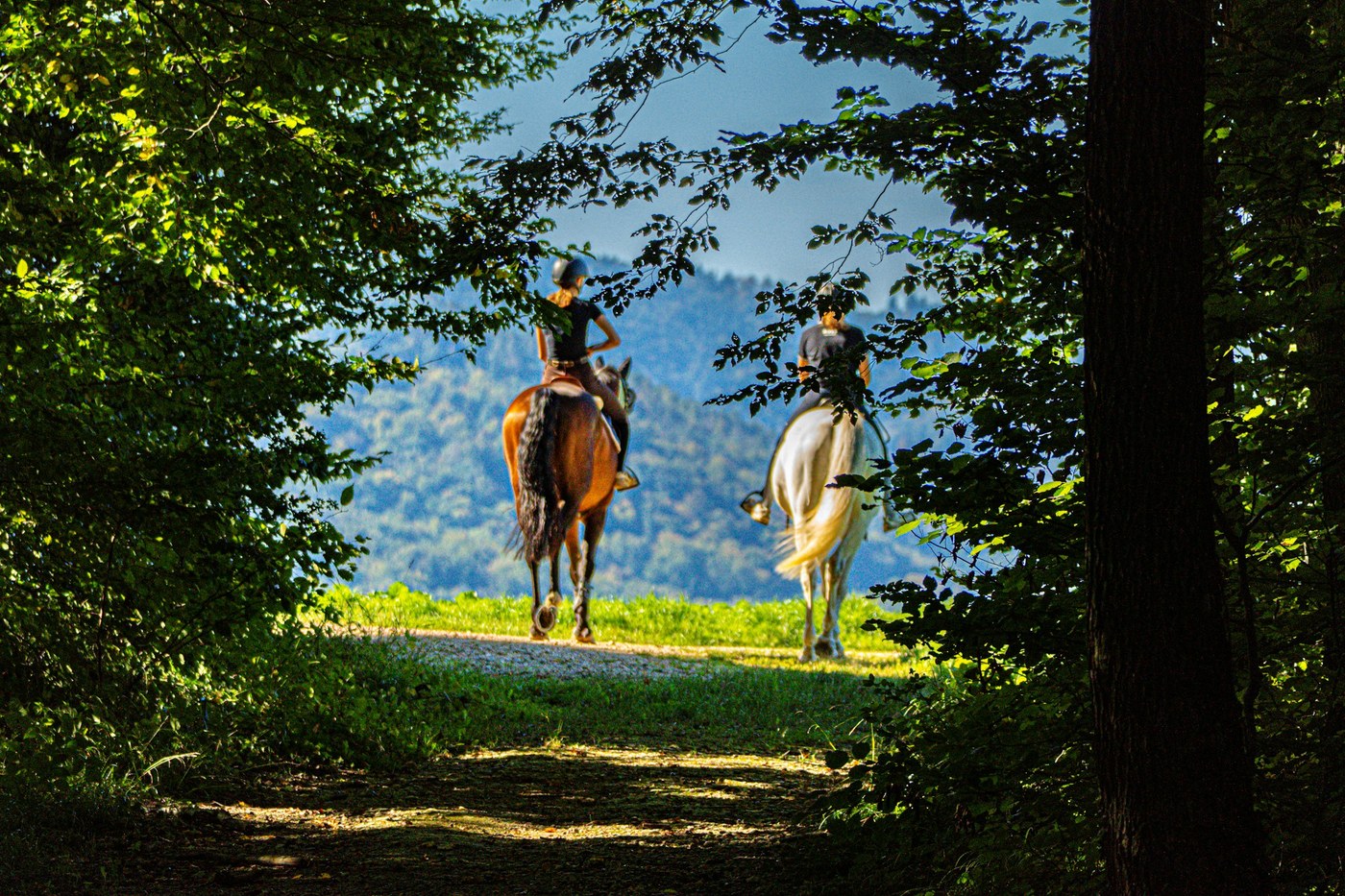
The Countryside Group Trail Ride is the obvious image: an hour at a walking pace through wooded trails and resort grounds. It currently starts at $180 per person, is limited to ages 10 and older, and carries a 220-pound rider limit. It is designed to be leisurely, not a chance for a beginner to canter through a field.
For someone who has never mounted, the Riding Lesson may be more useful. At $175 and up for ages 5 and older, it includes grooming, horse safety, tacking and instruction in the outdoor arena. The current program stays on the flat at a walk or trot; it does not offer cantering or jumping. An arena can feel less cinematic than a trail, but it gives a novice time to learn what hands, seat, voice and balance communicate.
The Stonewall Private Trail Ride begins at $230 per person, shares the age-10 and 220-pound limits, and suits experienced riders or guests seeking a quieter private route. “Private” does not mean unregulated; the guide, conditions and horse still set the pace.
Not everyone needs to ride. Horses 101 is a one-hour, all-ages introduction to petting, grooming, care and safety, currently $230 for a family of as many as four. Essential Horsemanship, $175 and up for ages 5 and older, is an unmounted session that may cover grooming, handling, bandaging and tacking. For children ages 2 to 4, a 10-minute pony ride starts at $35 and requires a parent or guardian to walk alongside.
These are not consolation programs. Learning to handle or care for a horse without sitting on it can be the more honest—and more memorable—encounter.
Price the service charge before saying yes
The resort adds a 25 percent service charge to equestrian activities. At current starting prices, that turns a $180 group trail ride into at least $225 before any applicable taxes or optional additional gratuity, and a $230 private ride into at least $287.50. Confirm the complete total, what the service charge covers and the cancellation deadline in writing.
Then account for the room, resort fee, meals, transportation and any spa treatment. Salamander's service fee includes several amenities and day-of Lexus transfers to attractions within five miles, but the equestrian program is an additional charge. Luxury becomes less restful when its costs arrive as surprises.
Dress for the horse, not the photograph
Ask the Equestrian Center for its current attire and helmet rules before packing. In general, riders need long pants and secure, closed footwear appropriate for a stirrup; loose accessories and an untested fashion boot can create problems. The center, not an article, should decide whether a particular shoe is acceptable and how a helmet is fitted.
Bring layers for Virginia weather and clothes that can collect dust or horse hair. Secure the phone and ask whether it may come on the trail. Arrive early enough to sign waivers, meet the guide and hear the safety briefing without transferring travel stress to the animal.
Most important, report experience accurately. “I rode twice as a child” is useful. “Intermediate” may not be. Tell the staff what you have done recently, whether mounting stairs or balance are concerns, and what feels frightening. A good match is more luxurious than a flattering label.
Leave space after the ride
Do not schedule a trail ride between a late checkout and an immediate spa appointment. Riding uses unfamiliar muscles, and an animal encounter deserves time to settle. Return to the room, drink water, change and notice what your body is saying.
If the afternoon needs structure, use the resort's day-of local transport to visit Middleburg or the National Sporting Library & Museum, subject to availability and the five-mile rule. The museum at 102 The Plains Road interprets equestrian and field-sport history through art, archives and objects. It currently lists Wednesday through Sunday hours from 10 a.m. to 5 p.m.; confirm the exhibition and access schedule before leaving.
A spa service is another option, but it requires its own advance planning. Salamander encourages appointments four to five weeks ahead, and some weekend times prioritize resort guests. A 25 percent nonadjustable service charge is added to spa services as well. Treat the stable and spa as two reservations, not automatic extensions of the room.
Understand what ownership changes—and what it does not
Johnson's vision is visible in more than biography. The 168 rooms carry textiles she helped design; the Owner's Suite includes pieces from her collection; the library holds books she selected. The resort's scale places Black ownership inside a tier of hospitality where ownership itself determines what gets built, collected, staffed and welcomed.
That does not make a horseback ride a symbolic exercise. The horse does not know the Forbes stars, and a guide's expertise matters more in the arena than a founder's résumé. The stronger reading is quieter: a Black woman created a place where travelers can enter horse country through instruction, leisure and care, without needing ancestry in the sport.
The first ride should preserve that freedom. Ask questions. Choose the less dramatic program if it fits. Walk beside the horse if that is where learning begins. There is no liberation in pretending to be unafraid.